
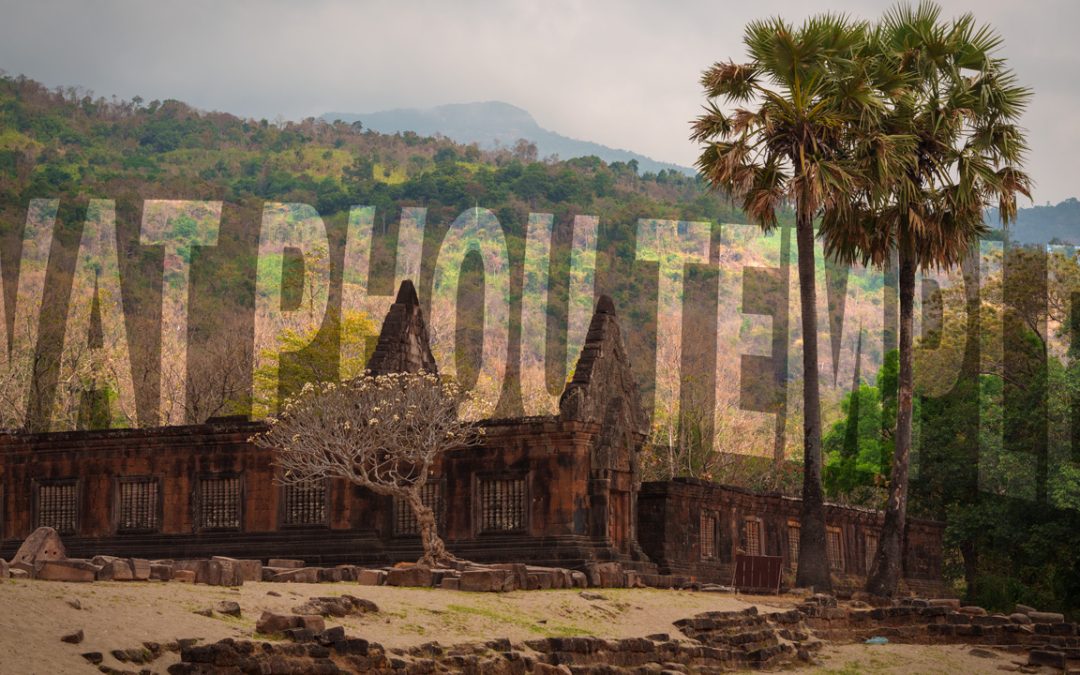
Vat Phou at Sunrise: A DIY Guide to Laos’ Ancient Khmer Temple
Vat Phou is one of the most important ancient sites in Laos, an ancient Khmer temple built into the hillseide overlooking the Mekong plains.
In this post I will cover all of the things to see on the site as well as my experiences doing a Vat Phou sunrise visit, before it is technically open.
Vat Phou / Wat Phou / Vat Phu … there are plenty of spellings, but for this post we will stick with Vat Phou as per the UNESCO listing.
The main ruins date largely from the 11th century, making them older than Angkor Wat, although religious activity on the site goes back much further. Inscriptions indicate that a sanctuary existed here as early as the 5th or 6th century.
I visited Vat Phou as an extra day after completing the Bolaven Plateau loop from Pakse.
As I stated before, I did a Vat Phou sunrise visit, which is before opening time. I wanted to try and set up a time lapse of the rising sun from the upper sanctuary. So I will discuss how I went about that as well as a guide to Vat Phou itself.
*Affiliates Disclosure
Affiliate links are present on this page. Through partnerships with, but not limited to: Amazon, eBay and Commission Factory, I will make a small commission through qualifying purchases. This comes at no extra cost to you and is just a way for me to try and support myself and the blog. Thank you.
Vat Phou at Sunrise Video
See the sights of Vat Phou in a way that this blog post can’t quite convey with this video that shows what the area is like.
The video also will help you see just what the points of interest look like at the top of the Vat Phou complex and the views on offer if you do a Vat Phou sunrise visit.
View From the Top
Shot on the Sony A1 (Amazon/eBay link) using the Sony 16-35mm GM II (Amazon/eBay link).
Vat Phou Information
Here is all of the information I gathered during my time there from visiting, reading the plaques and also gathered from online research as well to make sense of what I saw at Vat Phou.
What is Vat Phou?
Vat Phou began as a Hindu religious site, closely associated with Shiva.
The main temple complex visible today was constructed primarily during the Khmer period, with much of it dating from the first half of the 11th century and later additions from the 12th and 13th centuries. Earlier inscriptions show that a sanctuary existed on the mountain centuries before the surviving buildings.
The location itself was fundamental to the temple.
Phou Kao was regarded as a sacred mountain, while a natural spring emerges from the rocks immediately behind the upper sanctuary.
The combination of mountain and water had religious significance, and the entire complex was laid out from the mountain towards the Mekong plains below.
Later, as Buddhism became dominant in Laos, Vat Phou became a Buddhist place of worship as well. It remains an active religious site today, so what you see is a mixture of the site’s original Hindu history and its continuing Buddhist use.
The wider Vat Phou and Associated Ancient Settlements within the Champasak Cultural Landscape was inscribed on UNESCO’s World Heritage List in 2001.
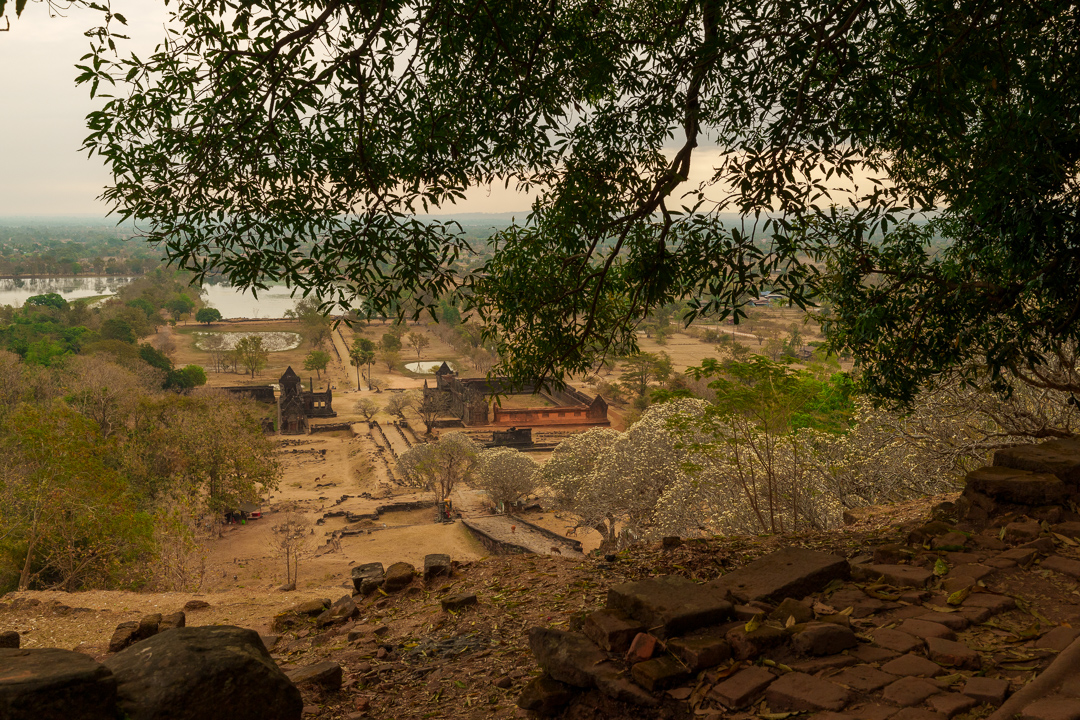
Shot on the Sony A1 (Amazon/eBay link) using the Tamron 28-200mm f/2.8-5.6 (Amazon/eBay link).
Where is Vat Phou?
Vat Phou is in Champasak District in southern Laos, between the Mekong River and Phou Kao mountain.
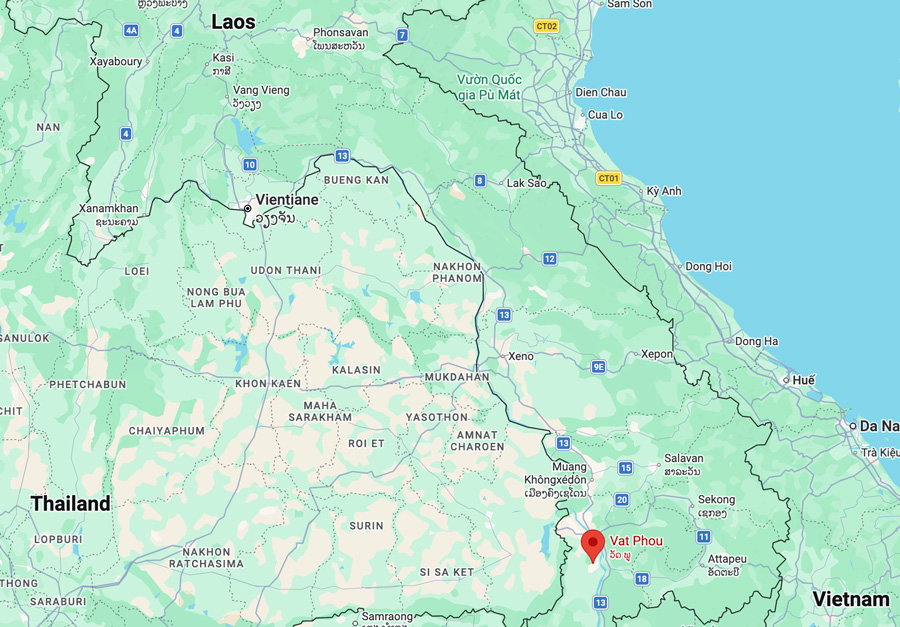
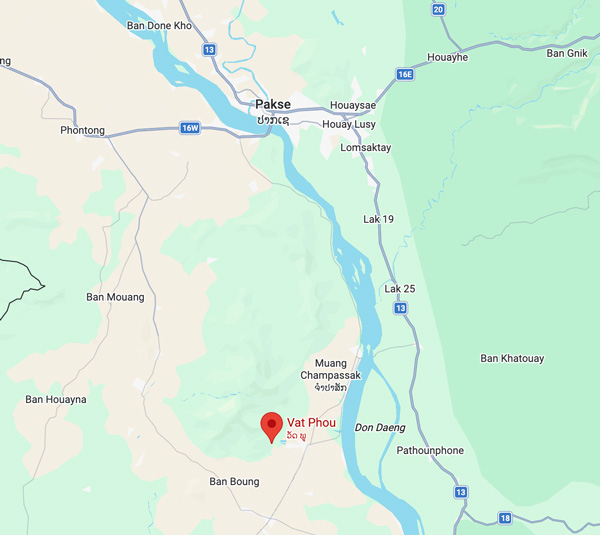
Champasak town is roughly 35–40 kilometres south of Pakse, while Vat Phou itself is another 10 kilometres from town. From Pakse, the modern road along the western side of the Mekong makes it straightforward to reach by scooter or motorbike.
How to Get to Vat Phou?
I travelled to Vat Phou by scooter.
This is how I recommend you visit as well, especially if you’re doing it before or after having done the Pakse Loop, since you’ll already have the scooter.
The alternative to this is to get a car or tuk tuk to take you from Pakse. This will all depend on whether you’re overnighting in Champasak to be closer to the temple or doing a day trip from Pakse.
Basically though, it will take you 40-60 minutes depending on the time of day and your driver/scooter riding speed.
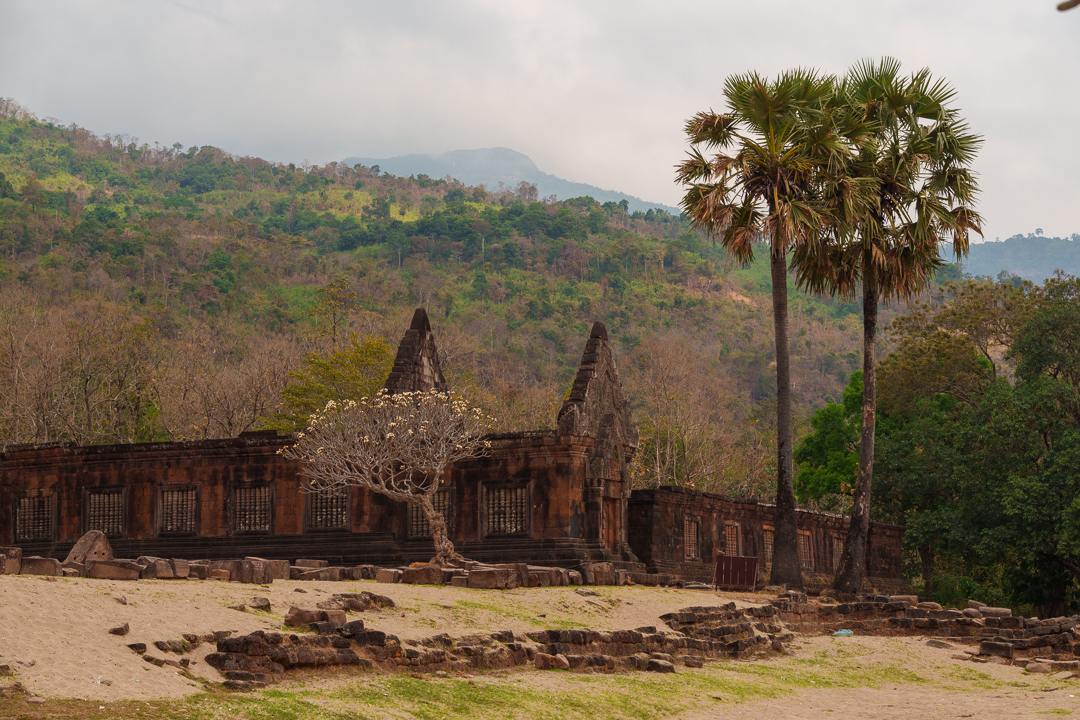
Shot on the Sony A1 (Amazon/eBay link) using the Tamron 28-200mm f/2.8-5.6 (Amazon/eBay link).
How Much Does It Cost to Enter Vat Phou?
Vat Phou is crazy cheap for how good it is in my opinion. See the prices below:
Entry: ₭ 55,000 / $3.66 AUD / $2.13 USD / £1.83 / €2.13
This is true as of 2026 but can alwyas change. It’s basically change, to walk around an ancient temple site with some pretty awesome views and a lot of freedom as well.
Can You Visit Vat Phou for Sunrise?
The opening time is officially 08:00.
As I said at the top of the post though, I wanted to do a Vat Phou sunrise visit because I wanted to set up a time lapse and I had heard of people having done it before.
I reached the main car park at around 5am because there is a decent walk to get to the top sanctuary before sunrise. The exit-side boom gate was raised, so I parked the scooter in the normal car park and walked into the complex.
A couple of people were around preparing shops for the day even at this early hour, and nobody stopped me or spoke to me.
I had heard in lots of reviews about people doing sunrise visits, some even stating that:
The official opening is 8am. However, signage indicates that there is overtime access from 6am
I cannot verify if this is still the case as that was written in 2016.
I recommend if you do want to go at sunrise, visit the day before and speak to the staff and even pay for the ticket there and then if they want you to.
Nobody seemed bothered by me being there so I assume a Vat Phou sunrise visit is kind of just looked past, just make sure you pay on the way out!
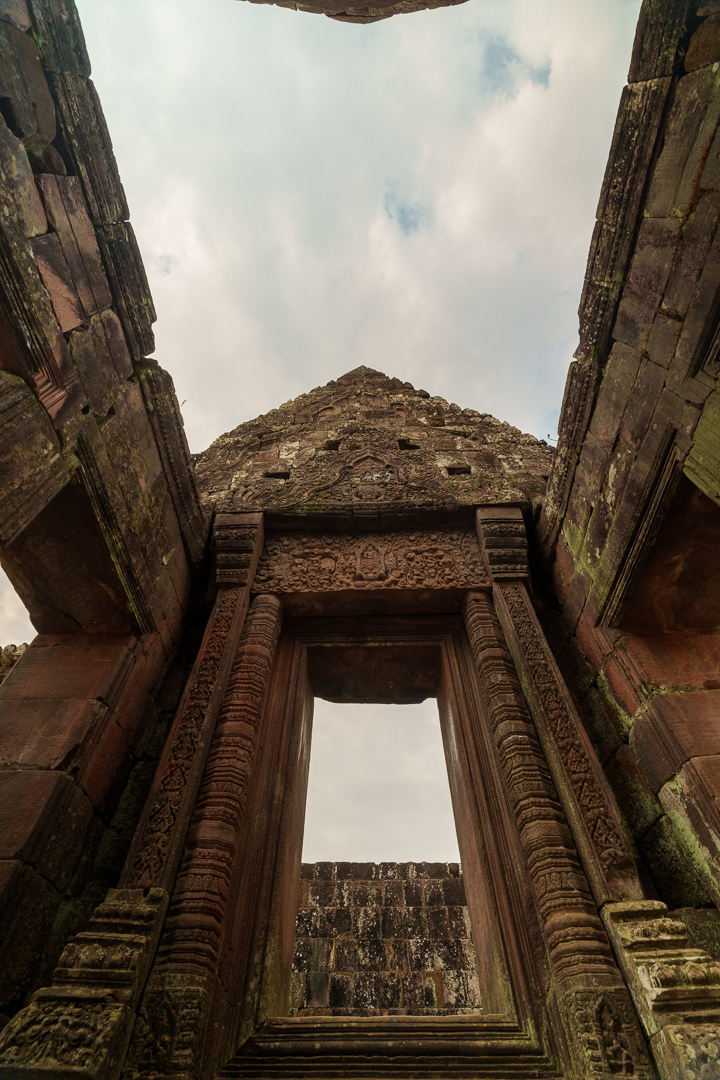
A view from inside the ‘South Palace’.
Shot on the Sony A1 (Amazon/eBay link) using the Sony 16-35mm GM II (Amazon/eBay link).
Why Vat Phou Faces East
One reason I specifically wanted to be there at sunrise is the orientation of the temple.
Vat Phou is arranged predominantly along an east-west axis, looking out from Phou Kao Mountain across the plains towards the Mekong.The east/west thing is a common thing found across all religions, but for photography can make good sunrise/sunset opportunities.
UNESCO describes the wider Champasak landscape as an expression of the Hindu relationship between nature and humanity.
The mountain, temples, shrines, causeways, reservoirs and waterworks form part of a planned sacred landscape extending for around 10 kilometres.
From the upper sanctuary, the view opens directly across that landscape.
My plan was to photograph the temple with the sun rising behind it.
Unfortunately, it didn’t quite work out how I had imagined.
Trees on the eastern side blocked much of the horizon and I couldn’t get both the sanctuary and sunrise into the composition I wanted, even using the widest lens I had. Cloud cover didn’t exactly help either.
Vat Phou Temple
The upper temple sanctuary with cosw grazing.
Shot on the Sony A1 (Amazon/eBay link) using the Sony 16-35mm GM II (Amazon/eBay link).
Visiting Vat Phou Temple
So that’s the general gist of Vat Phou and its layout, now let’s look at my particular Vat Phou sunrise visit and how I experienced the site in the early morning.
Walking to Vat Phou in the Dark
If you do arrive before daylight, bring a head torch.
It was completely dark when I started walking, and although the main approach isn’t technically difficult, the ground is uneven in places. I had roughly a kilometre of walking before reaching the main stairways, followed by somewhere around 150–200 stone steps to reach the upper sanctuary.
The complete archaeological complex stretches for around 1.4 kilometres from the plain to the upper sanctuary, which sits approximately 100 metres higher at the foot of the mountain.
There is also an electric shuttle operating during normal visiting hours between the entrance area and the beginning of the main temple complex. When I visited before opening time, obviously that wasn’t running, so I walked the entire way.
Exploring the Upper Sanctuary
If you’re going for sunrise the chances are you want to head straight for the upper sanctuary first, to view the sunrise from an elevated viewpoint looking down at the barays and palaces.
It also gives you the most amount of time at the top by yourself, although chances are you’ll be finished your entire visit by the official opening time of 08:00 or shortly after.
The lower portion consists of the North Palace and the South Palace, these are the two temple ruins on the flat ground, west of the barays (water reservoirs) but before the ascent.
Once you’ve climbed the staircases you reach the surviving sanctuary beneath the cliffs of Phou Kao.
Behind and around it are several smaller points of interest that you will see markers for on Google Maps and read about in blogs. You may as well find them all.
- The Sacred Spring.
- Buddha’s Footprint.
- Elephant Rock.
- The Crocodile Stone.
- The Trimurti Relief.
There is a little map just in front of the temple that shows where these points are, but I didn’t see this map beforehand I just walked around until I found them all.
The Sacred Spring
Immediately behind the sanctuary is the natural spring. Water flows from the rocks above the temple and is channelled through the sanctuary area.
The spring is one of the reasons the position of Vat Phou was religiously significant in the first place.
The sanctuary sits directly beneath the cliff where the sacred spring emerges, connecting the architecture of the temple to the mountain itself.
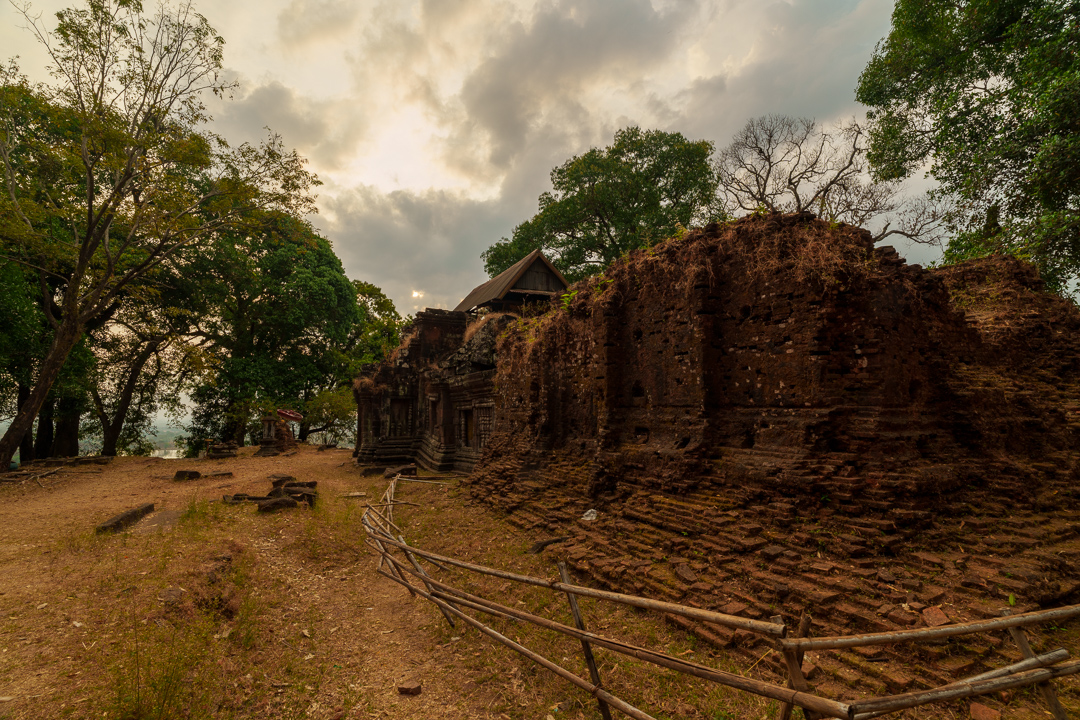
Vat Phou Upper Sanctuary.
Shot on the Sony A1 (Amazon/eBay link) using the Sony 16-35mm GM II (Amazon/eBay link).
Buddha’s Footprint
As you’re looking west at the main sanctuary, go up the hill behind it to the right and in the side of the rock wall is this big foot imprint carving. This is what they call Buddha’s footprint.
It’s not, obviously, but that’s the name.
It isn’t difficult to find once you know where to look, although it’s above the main level rather than directly beside the sanctuary.
Elephant Rock
A short walk away is a large rock carving of an elephant.
This is to the north or the upper sanctuary, near crocodile rock as well.
The carving is considerably weathered, but its shape is still very clear.
Given the age and historical importance of the site (or so I am lead to believe) it was a shame to see it with some graffiti markings on it. But it was still one of the better points of interest and I liked the rock.
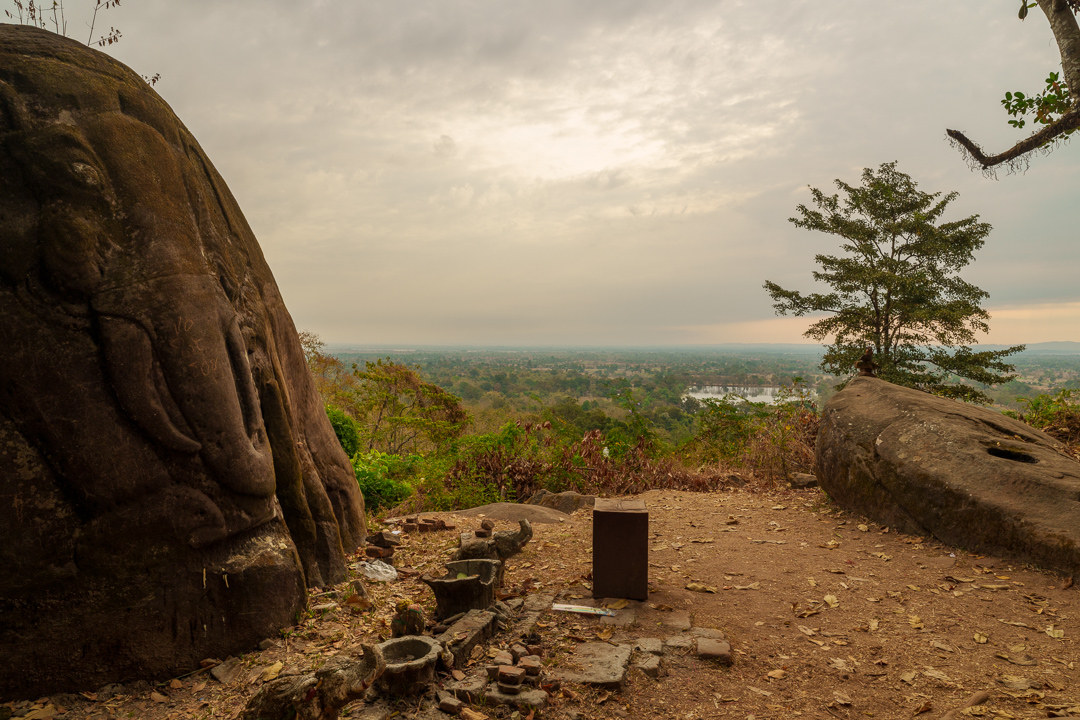
Shot on the Sony A1 (Amazon/eBay link) using the Sony 16-35mm GM II (Amazon/eBay link).
Crocodile Rock
A little closer to the temple along the same general path is one of Vat Phou’s strangest features: the crocodile carving.
It is essentially a crocodile-shaped cutout carved into a large flat rock.
There have been theories connecting the carving with ritual sacrifice, but the evidence isn’t strong enough to be guaranteed.
It’s ok, again though maybe some more information about each carving or point of interest would help people to understand their significance.
The View From the Top
The best thing about a Vat Phou sunrise visit is that you get the top to yourself (more than likely anyway), for a good number of hours.
Although I had some cloud and haze covering the sunrise, it is still a beautiful time of day and super peaceful to just chill, looking out over the plains as cows and goats graze around you.
I loved my time at the top, the view is awesome, it feels like you’re in another world because evrything around you is centuries old.
Looking east you can see down the long processional walkways, past the temple north and south palaces and across the two large barays.
Beyond them the landscape opens towards the Mekong plains.
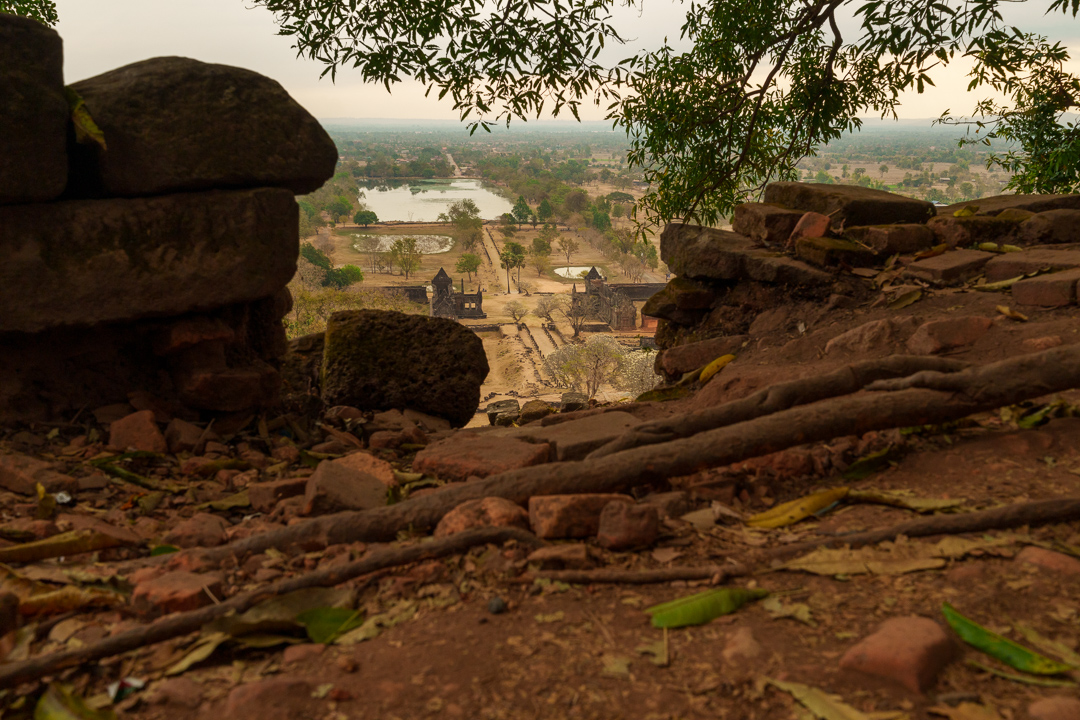
Views stretch all the way out across the plains and the processional walkway.
Shot on the Sony A1 (Amazon/eBay link) using the Tamron 28-200mm f/2.8-5.6 (Amazon/eBay link).
Naga Statues
Shot on the DJI Mini 5 Pro (Amazon).
The Lower Sections
After however many hours you decide to spend at the top you can start making your way down the stairs towards the lower palaces. I personally wanted to do this before the gates opened.
After my Vat Phou sunrise visit had got me to the top around 05:30 -I had spend about 2 hours at the top and started down the stairs around 07:30.
The Stone Staircases and Frangipani Trees
Oddly enough, one of my favourite parts of Vat Phou wasn’t a temple at all.
It was the stairway, mostly becaue of the white flowering trees that arched across the top of it.
Ancient stone steps climb between huge old frangipani trees, with branches arching across the staircase and framing the view down towards the plains.
I kept stopping while descending to take photographs, which made the journey back down considerably slower than it needed to be.
If you’re there early, this is another good reason to start at the top and work down. You can photograph the staircases while the light is still soft and before people begin climbing towards you.
I got Lord of the Ring vibes from it, it felt like something medieval or from a fairytale with uneven stairs and these trees.
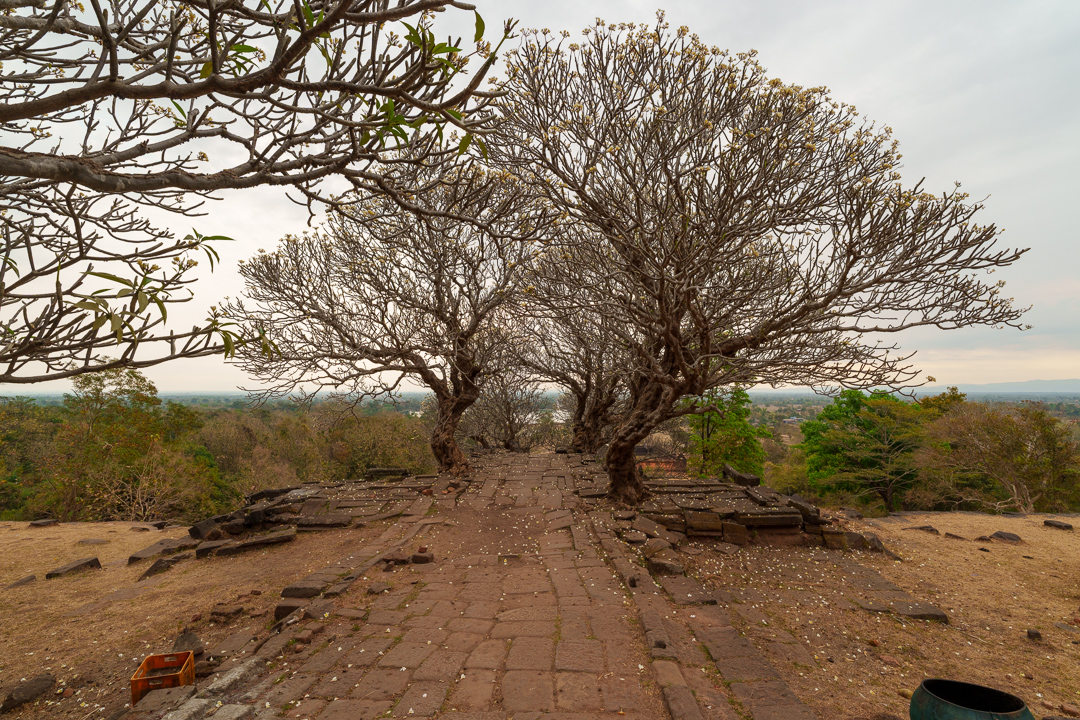
Shot on the Sony A1 (Amazon/eBay link) using the Sony 16-35mm GM II (Amazon/eBay link).
The North and South Palaces
Below the main staircase are two large symmetrical buildings generally referred to as the North Palace and South Palace, although “palace” doesn’t necessarily mean they functioned as royal residences.
They stand on either side of the processional route and are among the most substantial surviving structures at Vat Phou.
You can walk around and through parts of the buildings, although restoration work may limit access depending on when you visit.
When I reached them it was shortly after the official opening time and the first visitors were only beginning to make their way through the complex.
Luckily it wasn’t a mad rush and there were only about 3 people, so I still got to walk through these palaces by myself.
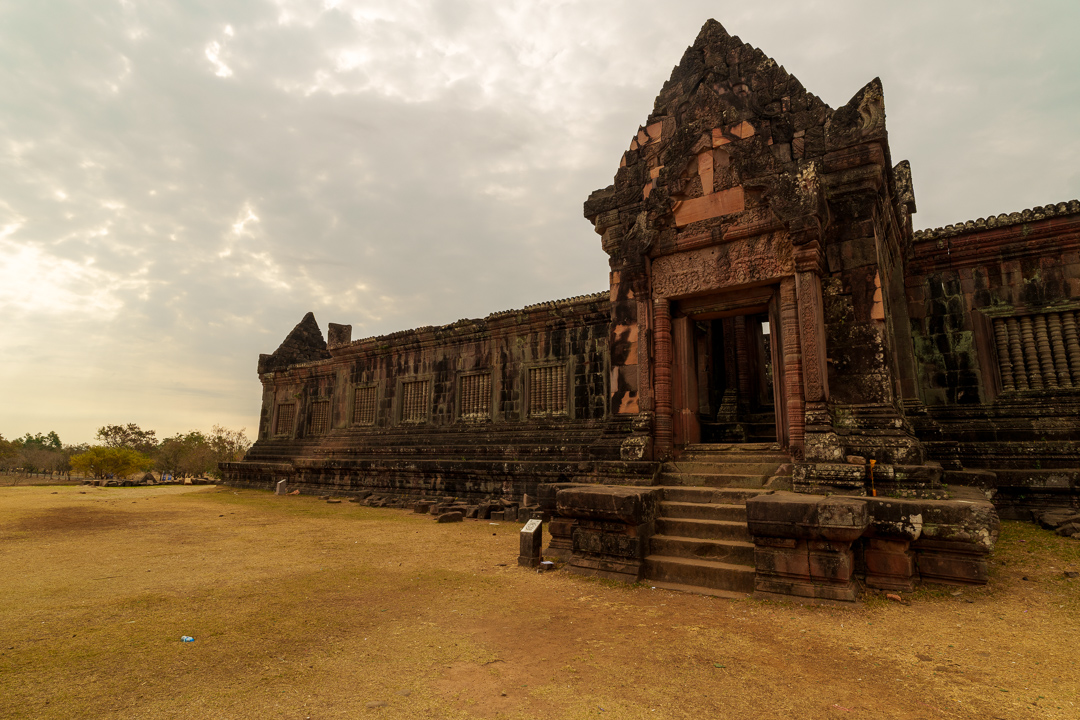
The ‘South Palace’ shortly after opening time.
Shot on the Sony A1 (Amazon/eBay link) using the Sony 16-35mm GM II (Amazon/eBay link).
The Processional Causeway and Barays
From the foot of the stairs and heading to the entry you have the long processional causeway, lined by rows of stone posts.
This is the classic approach towards Vat Phou and probably the first view of the temple complex most daytime visitors experience. If you come at sunrise this whole section you will walk in the dark at the beginning.
On either side of the wider landscape are large barays, or artificial reservoirs.
The alignment becomes much easier to understand from here: the approach draws your eye from the plains towards Phou Kao, with the sanctuary sitting high against the mountain in the distance.
UNESCO considers this relationship between the monuments and their natural setting one of the defining features of the entire Champasak cultural landscape.
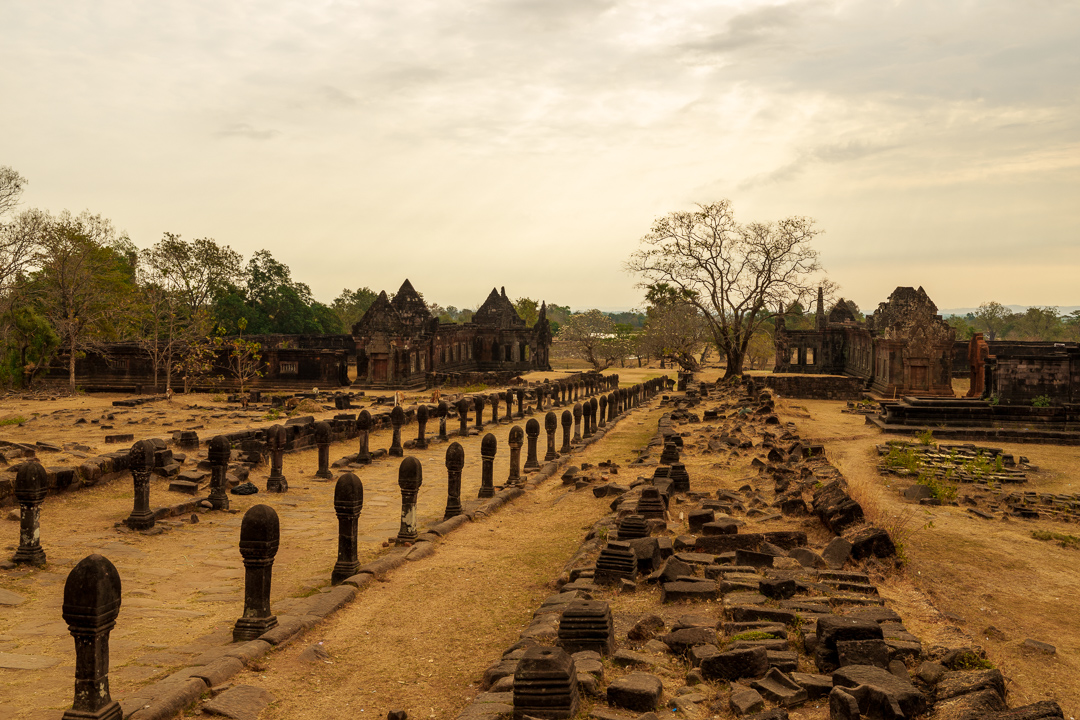
The walkway starts from and includes the stairs, then splits the ‘palaces’ and goes through the barays.
Shot on the Sony A1 (Amazon/eBay link) using the Sony 16-35mm GM II (Amazon/eBay link).
That is essentially it for Vat Phou, some buildings may not have access as they continue to do restoration projects around the place.
I could have spent more time on the lower levels but I didn’t fully explore in as much detail as I did the top levels. I had to ride back to Pakse to return my motorbike and catch a flight so it was a bit of a rush.
There is one more location though that is linked to Vat Phou nearby – Prasat Hong Nang Sida.
I had visited this the previous afternoon as I had the accommodation in Champasak and knew I wouldn’t have had the time the day of my Vat Phou sunrise visit.
Elephant Rock
Shot on the Sony A1 (Amazon/eBay link) using the Sony 16-35mm GM II (Amazon/eBay link).
Prasat Hong Nang Sida
You’ll see the name written as Hong Nang Sida, Nang Sida Temple or Prasat Hong Nang Sida.
Consider this an extension to Vat Phou. It is free entry with some informational plaques to read as well about its significance.
What is Hong Nang Sida?
Hong Nang Sida is another Khmer temple complex, constructed around the 11th to early 12th century.
The principal structure consisted of a sanctuary tower with an entrance hall, surrounded by a precinct wall and associated buildings. UNESCO’s archaeological documentation suggests the wider site was used from approximately the 10th through 14th centuries and may have formed part of a much larger planned settlement.
For a long time the main sanctuary was badly collapsed, with enormous sandstone blocks from the tower lying around the ruins.
That has made Hong Nang Sida an important restoration project.
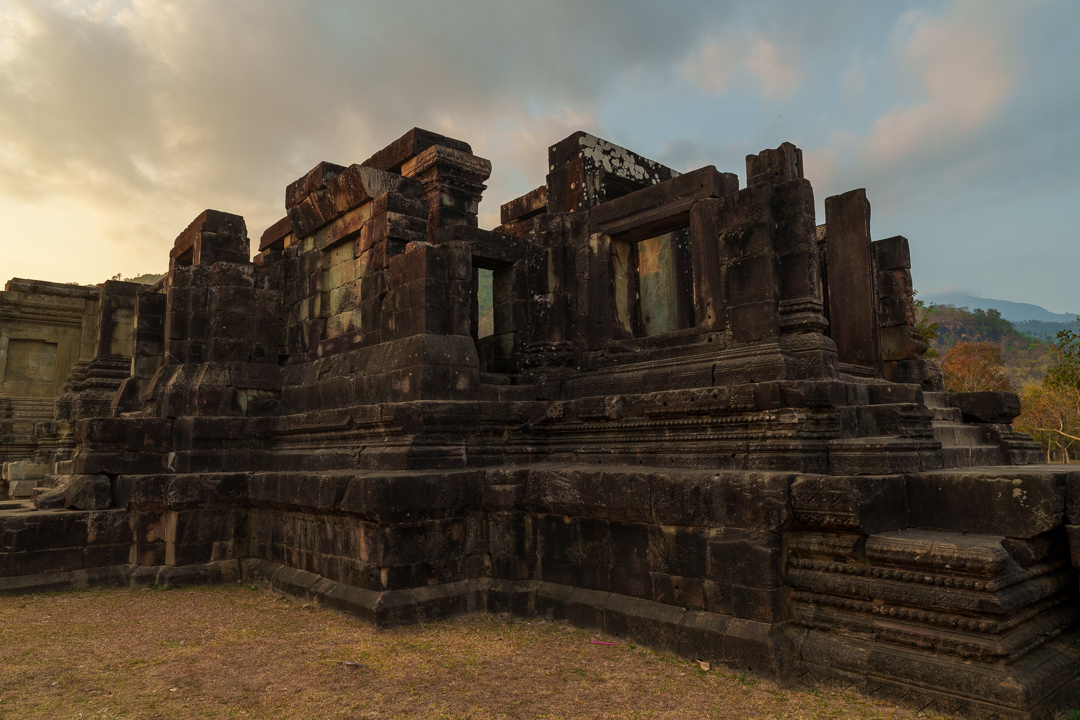
Shot on the Sony A1 (Amazon/eBay link) using the Sony 16-35mm GM II (Amazon/eBay link).
Where is Hong Nang Sida?
It sits roughly 1.5–2 kilometres south of Vat Phou, close to the route of an ancient Khmer road.
UNESCO’s original nomination documentation describes that road as probably having continued for more than 200 kilometres towards Angkor, the capital of the Khmer Empire.
That connection makes Hong Nang Sida quite an interesting place but I think even without that context these are cool ruins to check out regardless. I visited around sunset as I rode into Champasak.
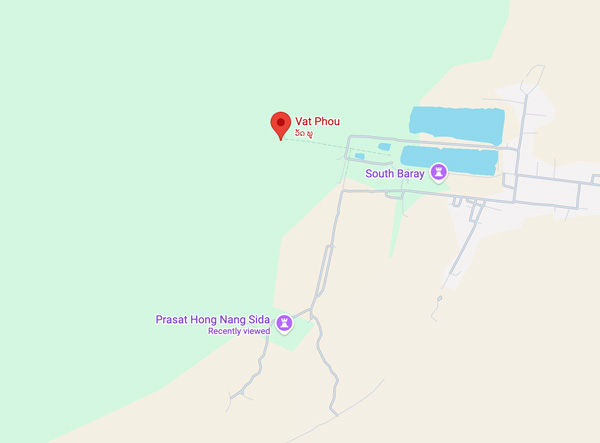
Restoring Hong Nang Sida
Conservation work has been underway with support from South Korea since 2013.
The project has involved archaeological excavation, detailed surveys, 3D modelling, stone conservation and dismantling and reconstruction of parts of the sanctuary. During restoration work in 2019, archaeologists also discovered a gilt-bronze yoni, an important Hindu ritual object and an unusual archaeological find in Laos.
The restoration also makes Hong Nang Sida an interesting contrast with Vat Phou.
Vat Phou is the monumental centrepiece of the landscape. Hong Nang Sida feels more like discovering one of the smaller pieces that made up the wider Khmer world surrounding it.
Hong Nang Sida and the Road to Angkor
Possibly the most interesting thing about the site isn’t the ruined temple itself, but where it sits.
An ancient road runs south from the Vat Phou complex past Hong Nang Sida and formed part of the Khmer transport network extending in the direction of Angkor.
UNESCO’s documentation describes the road leaving the Nandi Hall at Vat Phou as a raised causeway about 14 metres wide at its base, with drainage channels beside its early section.
It is a useful reminder that Vat Phou was not some isolated temple sitting in what is now southern Laos.
This whole area was once connected culturally, politically and physically with the much larger Khmer world that stretched across mainland Southeast Asia.
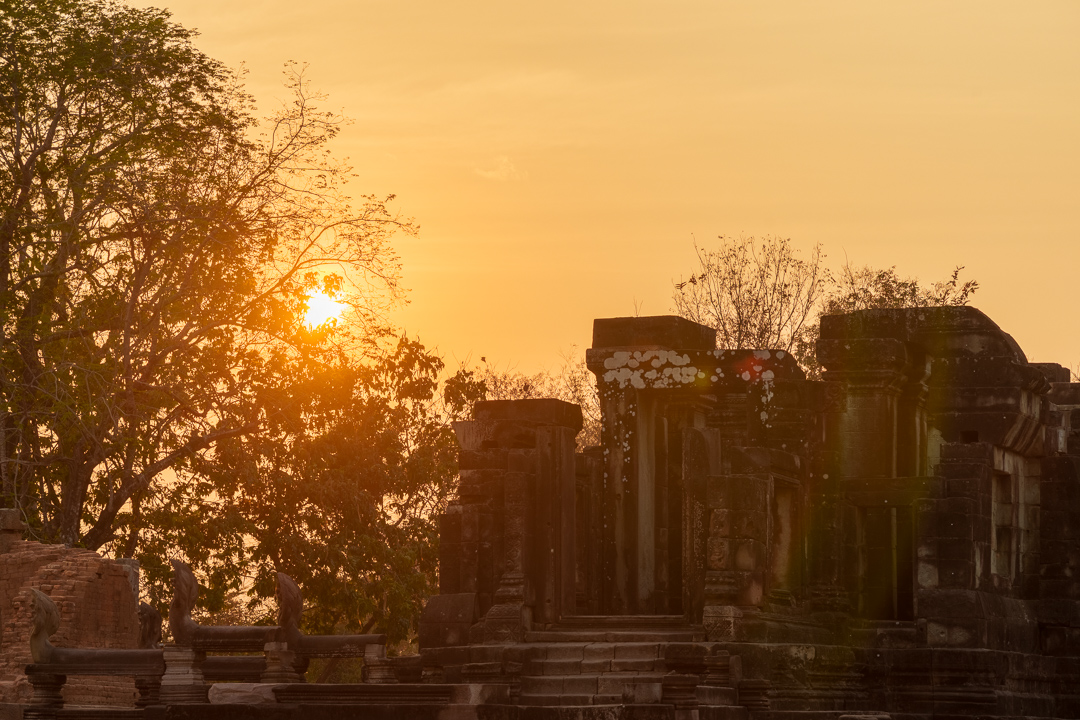
Shot on the Sony A1 (Amazon/eBay link) using the Tamron 28-200mm f/2.8-5.6 (Amazon/eBay link).
Summary
Ok, that is it for the Vat Phou sunrise visit post.
If you have any questions then your best bet for a response is to reply on the Youtube video as I am more likely to see the comments there.
Here are a few FAQs though just to finish off.
How Long Do You Need at Vat Phou?
I spent more than three hours at Vat Phou.
I arrived at around 5am and was leaving the main archaeological area at roughly 8:45am.
You don’t necessarily need that long.
For a normal visit, I think two to three hours is comfortable if you want to see the main buildings, climb to the sanctuary, find the rock carvings and stop for photographs.
If you simply walk straight up, look at the sanctuary and come back down, you could do it much faster.
I would recommend 2 hours as a minimum. I spent longer because I had it to myself and it was peaceful at sunrise. I was also there in the dark as well and waiting for the sun to rise anyway.
Is Sunrise Worth It?
Yes, if you like to get up early and have a place to yourself then a Vat Phou sunrise visit makes it more unique and gives you a better connection I think.
Being alone amongst thousand-year-old ruins was vastly more memorable than the sunrise itself, but your conditions could vary.
That time of day has the best lighting for photography, unless you wanted to come more around sunset.
By the time the first visitors started walking up the processional avenue, I’d already explored virtually everything around the upper sanctuary, photographed the staircases without anybody on them and had the entire top of Vat Phou to myself for several hours.
Even if you don’t want to get there at sunrise, I would still arrive as close to opening time as possible.
When I finally left, there were people arriving, but it still wasn’t remotely busy.
So if you come bang on official opening time I think you’ll still enjoy a lot of the place to yourself.
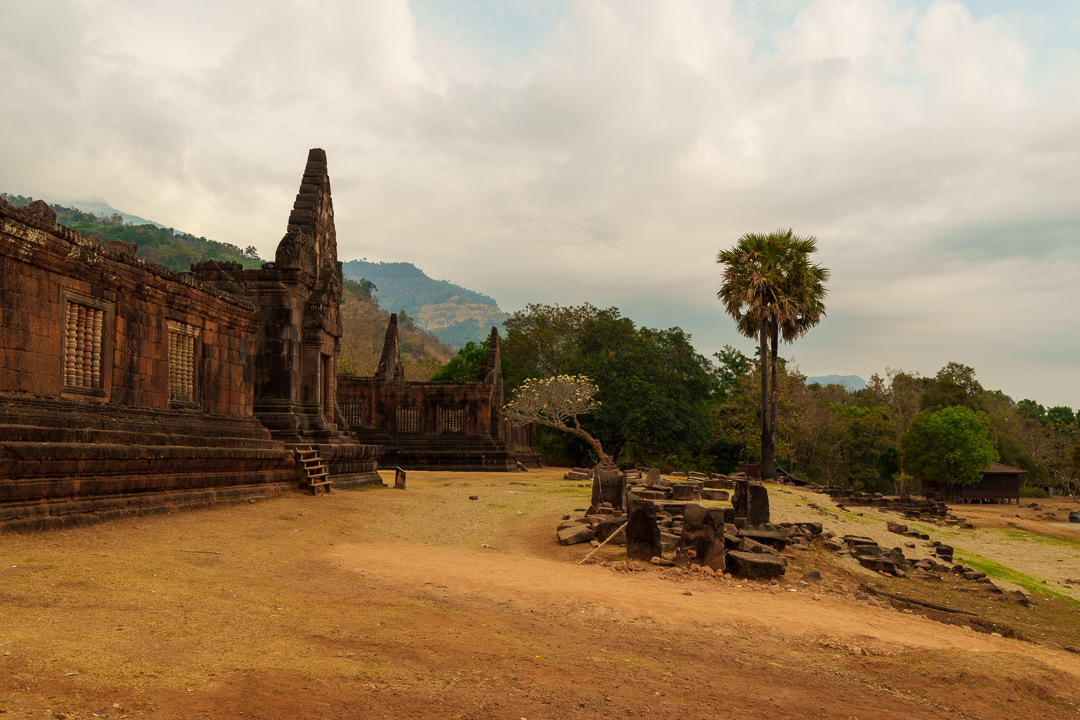
South and North Palace.
Shot on the Sony A1 (Amazon/eBay link) using the Tamron 28-200mm f/2.8-5.6 (Amazon/eBay link).
Is Hong Nang Sida Worth Visiting?
I think so, particularly because it is so close to Vat Phou and it won’t take you long to have a quick walk around the remaining ruins.
If you’ve rented a scooter or motorbike, the detour is minimal.